Management Practice Insights
DOI: 10.59571/mpi.v4i2.8
Year: 2026, Volume: 4, Issue: 2, Pages: 120-125
Original Article
Vedika Saxenai*
iS.P. Jain Institute of Management & Research
*Corresponding author
Email: [email protected]
Received Date:25 May 2026, Accepted Date:18 September 2026, Published Date:30 September 2026
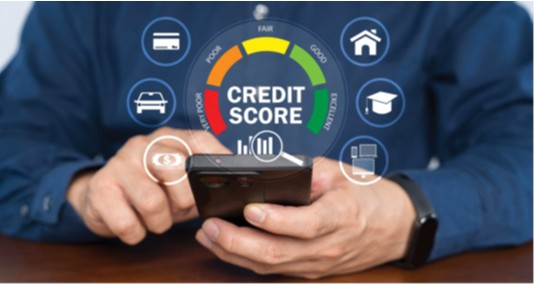
Credit decisions at lending institutions are expected to reflect a borrower’s creditworthiness and ability to repay. Yet, credit officers routinely and subconsciously allow cultural biases based on caste, religion, ethnicity, or community to contaminate their loan decisions. Biased credit decisions can result in loan approvals to borrowers with poorer credit outcomes, rejection of creditworthy applicants, degraded loan performance, and lost returns. A Study by Francesco D’Acunto, Pulak Ghosh and Alberto G. Rossi shows that data-driven recommendations can reduce such biases and move lenders away from borrowers they may otherwise favour because of shared cultural identity. For credit risk leaders and lending managers, this implies that algorithmic recommendations should be used alongside human judgment to mitigate cultural bias and improve lending decisions
1 Francesco D’Acunto et al., “How Costly Are Cultural Biases? Evidence from FinTech,” Journal of Financial Economics 175 (1): 104202, https://doi.org/10.1016/j.jfineco.2025.104202.
2 “Global Consumer Lending Industry Trends Analysis Report 2025, Forecast to 2033 (Broken Down by Type, End User, Regional Analysis, and Competitive Landscape), https://www.marketresearch.com/Maia-Researchv4212/Global-Consumer-Lending-Trends-Forecast-42499906/.
3 Robert Bartlett et al., “Consumer-Lending Discrimination in the FinTech Era,” Journal of Financial Economics 143, no. 1 (2022): 30–56, https://doi.org/10.1016/j.jfineco.2021.05.047.
4 Raymond Fisman et al., “Cultural Proximity and Loan Outcomes,” American Economic Review 107, no. 2 (2017): 457–92, https://doi.org/10.1257/aer.20120942.
5 Will Dobbie et al., “Measuring Bias in Consumer Lending,” The Review of Economic Studies 88, no. 6 (2021): 2799–832, https://doi.org/10.1093/restud/rdaa078.
6 Raanan Lipshitz and Nurit Shulimovitz, “Intuition and Emotion in Bank Loan Officers’ Credit Decisions,” Journal of Cognitive Engineering and Decision Making 1, no. 2 (2007): 212–33, https://doi.org/10.1518/155534307X232857.
7 Prasanna Tantri, “Fintech for the Poor: Financial Intermediation Without Discrimination* | Review of Finance | Oxford Academic,” Review of Finance 25, no. 2 (2021), https://doi.org/https://doi.org/10.1093/rof/rfaa039.
8 Dan Ennis, “Upstart Boosts Loan Approval 27% with Alternative Data in CFPB Test | Banking Dive,” Banking Dive, 7 August 2019, https://www.bankingdive.com/news/upstart-CFPB-alternativecredit-data-test/560426/.
9 Casey Ariel Diké, “How Tala Revolutionized Financial Inclusion: A Model for Empowering Underserved Communities,” Blaze Group, 12 August 2024, https://www.blazegroup.io/post/how-talarevolutionized-financial-inclusion-a-model-for-empoweringunderserved-communities.
10 Margarete Biallas and Felicity O'Neill, Artificial Intelligence Innovation in Financial Services, June 2020, https://doi.org/10.1596/34305.
11 Antara Haldar and Joseph E. Stiglitz, “Group Lending, Joint Liability, and Social Capital: Insights From the Indian Microfinance Crisis,” Politics & Society 44, no. 4 (2016): 459–97, https://doi.org/10.1177/0032329216674001.
12 Klaus Dallerup et al., McKinsey’s Global Banking Annual Review 2026 | McKinsey (2026), https://www.mckinsey.com/industries/financial-services/ourinsights/global-banking-annual-review.
13 Dan Ennis, “Upstart Boosts Loan Approval 27% with Alternative Data in CFPB Test | Banking Dive.”
14 Margarete Biallas and Felicity O’Neill, Artificial Intelligence Innovation in Financial Services.
15 Shawn Donnan et al., “Wells Fargo Rejected Half Its Black Applicants in Mortgage Refinancing Boom,” Bloomberg.Com, March 11, 2022, https://www.bloomberg.com/graphics/2022-wellsfargo-black-home-loan-refinancing/.
© 2026 Published by SPJIMR. This is an open-access article under the CC BY license (https://creativecommons.org/licenses/by/4.0/)
Subscribe now for latest articles and news.